How to Clean Airport Terminals Guide

Airports never really stop moving. From early morning departures to late-night arrivals, airports are under constant pressure from passengers, baggage, food traffic and weather being dragged in from outside. That is exactly why understanding how to clean an airport properly has become far more than just keeping floors shiny.
In 2026, airport managers are not just looking for cleaning contractors who can make a terminal look presentable. They need cleaning operations that improve safety, reduce disruption and help maintain standards in an environment where timing is CRITICAL.
Airport Cleaning Keeps Things Moving
One of the biggest misconceptions about airport cleaning is that it only happens after hours. Most terminals are being cleaned constantly throughout the day while thousands of passengers continue moving through the building.
That creates quite a challenge.
Cleaning teams need to maintain high standards without impacting flow, creating slip risks or disrupting security and boarding operations. A machine out of service or a wet floor in the wrong place can quickly become much more than just an annoyance.
So, How Do You Clean an Airport Effectively?
When it comes to airport cleaning machinery, no one-size-fits-all. Successful routines rely on a blend of thoughtful planning, the right machines and preventative maintenance.
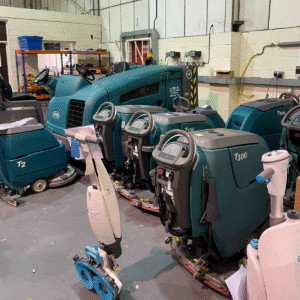
Larger spaces like departure lounges benefit from scrubber dryers that can clean quickly leaving floors immediately dry and safe to walk on. In tighter areas like restrooms, seating areas and corridors, compact machines allow cleaning staff to work efficiently without causing obstructions.
This is why battery-powered cleaning machines have become the standard in airports. They are quiet, more flexible and better suited to busy environments where safety, noise and emissions matter.
The Biggest Attention Seeker
Some parts of an airport simply never slow down and need constant attention. Security areas, entrances, baggage reclaim zones and food courts can become very dirty, very quickly, especially during the current peak travel period.
Rather than relying purely on routine deep cleans, many airports are now adopting continuous, preventative cleaning methods. This means cleaning crew are always present in high-footfall areas, responding proactively before cleanliness standards slip. A far more practical approach for modern terminals where passenger expectations are higher than ever due to rising flight costs.
Reliability Seriously Matters
In airports, machine breakdowns can create serious knock-on effects. If a scrubber dryer fails during busy hours, cleaning routines quickly fall behind. That’s why servicing and preventative maintenance are now such an important part of airport cleaning operations.
Having reliable machines is only half the equation. Airports also need fast support, trained operators and equipment that is designed to handle demanding daily use. We work closely with facilities teams to make sure cleaning equipment is not only performing well but staying operational.
Safety and Compliance Cannot Be Overlooked
Clean floors are important – but safe floors are ESSENTIAL.
Slip prevention is one of the biggest priorities in airport cleaning. With hundreds of passengers moving through terminals every hour, cleaning methods need to minimise drying times and reduce hazards as much as possible.
Airports are also under growing pressure to meet environmental and compliance targets. Many are now looking for ways to reduce water and chemical usage and improve sustainability without compromising cleaning performance.
This is driving greater demand for smarter cleaning technologies, efficient dosing systems and machines that can deliver strong results with fewer resources.
Technology Is Changing Airport Cleaning
Modern airport cleaning is becoming increasingly data driven. Smart cleaning machines can now track usage hours, maintenance schedules and even water consumption, giving facilities managers far greater visibility over their operations. Instead of reacting to problems after they happen, teams can identify inefficiencies early, reduce downtime and increase productivity.
For airports operating in high-wage, high-speed environments, that level of insight is becoming incredibly valuable.
Final Thoughts
Understanding how to clean an airport today is really about understanding how airports operate as a whole.
The goal is no longer just to create a clean-looking terminal. It is about keeping passengers moving safely, meeting compliance standards and supporting operational uptime in one of the most demanding commercial environments there is.
With the right equipment, servicing support and cleaning strategy in place, airports can uphold high standards without compromising on efficiency.
Need support? We help cleaning teams build practical, reliable cleaning operations designed for modern transport environments. Contact us today.