How to Clean a Warehouse: A Complete Guide
How to Clean a Warehouse (Quick Answer)
Mastering how to clean a warehouse effectively involves assessing your site, identifying the type of dirt and debris, and using the right industrial cleaning machines – typically sweepers for dust and debris, and scrubber dryers for deep floor cleaning. A structured cleaning schedule and the correct equipment are essential to maintain safety, efficiency, and compliance without disrupting operations.
Why Warehouse Cleaning Is Now Business-Critical
Warehouse cleaning has shifted from a background task to a core priority.
In today’s high-speed logistics environments, managers aren’t just focused on appearance – they’re focused on uptime, safety, and compliance. With labour costs rising and operations running around the clock, inefficient cleaning can quickly become a bottleneck. So, when people search for how to clean a warehouse, they’re really looking for a smarter, more reliable way to keep everything running smoothly.
What Makes Warehouse Cleaning Different?
Warehouses bring a unique set of challenges. The size, layout, and constant movement mean dirt builds up quickly and unevenly. You’re often dealing with a mix of fine dust, loose debris, and heavier contaminants like oil or tyre marks. Add in narrow aisles and high racking, and it becomes clear that traditional cleaning methods simply aren’t enough. There’s also the added pressure of health and safety compliance. Dust, for example, isn’t just a cleanliness issue – it can affect air quality and even create fire risks in certain environments.
How to Clean a Warehouse Step by Step
-
Assess the Warehouse Environment
Start by understanding your site. The size of the warehouse, the layout of the racking, and the level of traffic all influence how cleaning should be approached. Floor type and finish are other key factors. Concrete, resin, and polished floors all require slightly different methods to achieve the best results.
-
Identify the Type of Dirt and Debris
Before choosing equipment, it’s important to know what you’re cleaning.
Some warehouses mainly deal with fine dust, while others face heavier debris or oil-based contamination. Each requires a different approach, and using the wrong method can make cleaning less effective – or even spread the problem further.
-
Use the Right Cleaning Methods
Sweeping for Dust and Debris
Sweeping is usually the first step. Industrial sweepers are designed to remove dust and loose debris quickly while keeping fine particles under control. Compared to manual methods, they’re faster, more consistent, and far better at preventing dust from becoming airborne.
Scrubbing for Deeper Cleaning
When it comes to how to clean warehouse floors, scrubbing is essential.
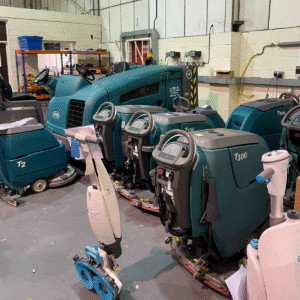
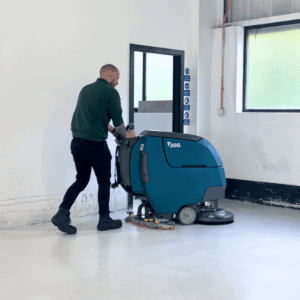
Scrubber dryers go beyond surface cleaning. They remove oil, grease, and tyre marks while drying the floor at the same time. This means the area can be used immediately, reducing the risk of slips and avoiding unnecessary downtime.
Combination Cleaning for Efficiency
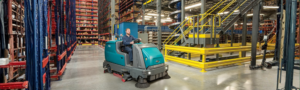
In larger warehouses, combination machines that sweep and scrub in a single pass can significantly reduce cleaning time. This is especially useful in environments where cleaning needs to happen alongside ongoing operations.
Automated Cleaning
Robotic combination cleaning machines offer a more efficient, low-labour approach to warehouse cleaning. Combining sweeping and scrubbing in one pass, they use sensors and mapping technology to clean large areas autonomously and consistently. Ideal for busy or 24/7 sites, they help maintain standards while freeing up staff for higher-value tasks, and reduce operational disruption.
-
Create a Consistent Cleaning Schedule
Cleaning works best when it’s planned, not reactive. High-traffic areas may need daily attention, while other parts of the warehouse can be cleaned less frequently. The goal is to prevent build-up rather than deal with it after the fact.
-
Minimise Disruption to Operations
One of the biggest challenges is cleaning without slowing things down.
Using the right equipment makes this much easier. Ride-on machines allow large areas to be covered quickly, while battery-powered options reduce noise and emissions. With the right setup, cleaning can happen with minimal impact on productivity.
Choosing the Right Warehouse Cleaning Equipment
What Affects Equipment Choice?
There’s no universal solution when it comes to warehouse cleaning equipment. The right machine depends on several factors, including the size of the warehouse, the width of aisles, the type of flooring, and the kind of dirt being removed. Cleaning speed and compliance requirements also play an important role.
This is why tailored recommendations always outperform off-the-shelf decisions.
Why the Right Approach Matters
When warehouse cleaning is done properly, the benefits are clear. Cleaning becomes quicker and more efficient, labour costs are reduced, and safety improves. Just as importantly, operations continue without unnecessary disruption. In a fast-moving warehouse environment, that kind of efficiency makes a real difference.
Get Expert Advice
If you’re reviewing your current cleaning approach or planning an upgrade, we can help you find the right solution for your facility.
Speak to us to get started.
Give us a Follow on LinkedIn for exclusive behind the scenes content of our team and machines!